We Interiors. The support line turned out to be the sales line.
Someone rings a furniture shop at eight in the evening to ask when the console table is actually arriving. It is the least glamorous question in retail, and at most shops this size it goes to voicemail. At We Interiors it gets answered, and more often than not it ends in an order.
“I just want to know when it is being delivered. Is anyone there?”
Le défi
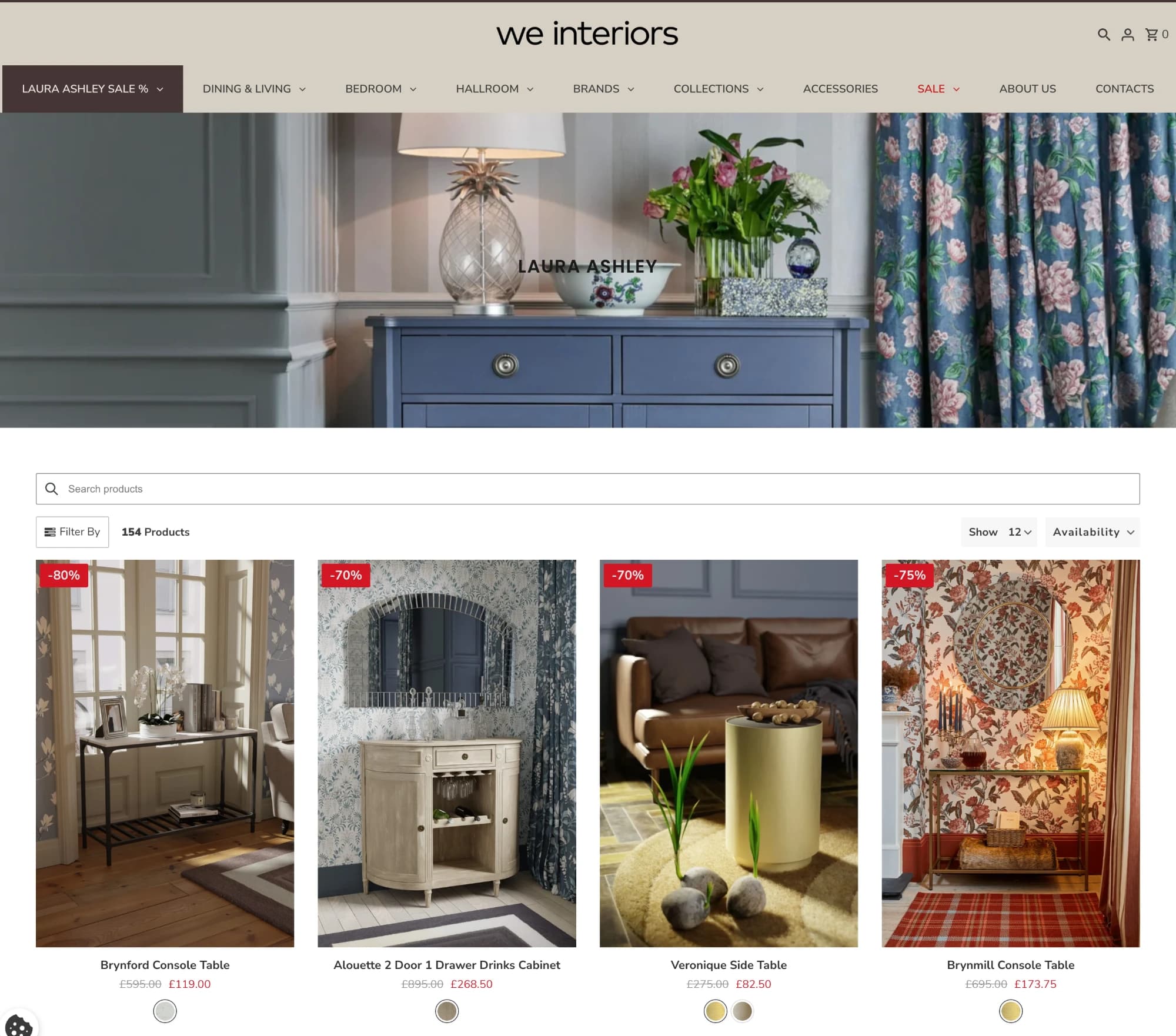
We Interiors is a UK interiors retailer and an official Laura Ashley stockist, with 154 pieces in that collection alone. Console tables at £595, drinks cabinets at £895, and a warehouse clearance running as deep as 80% off.
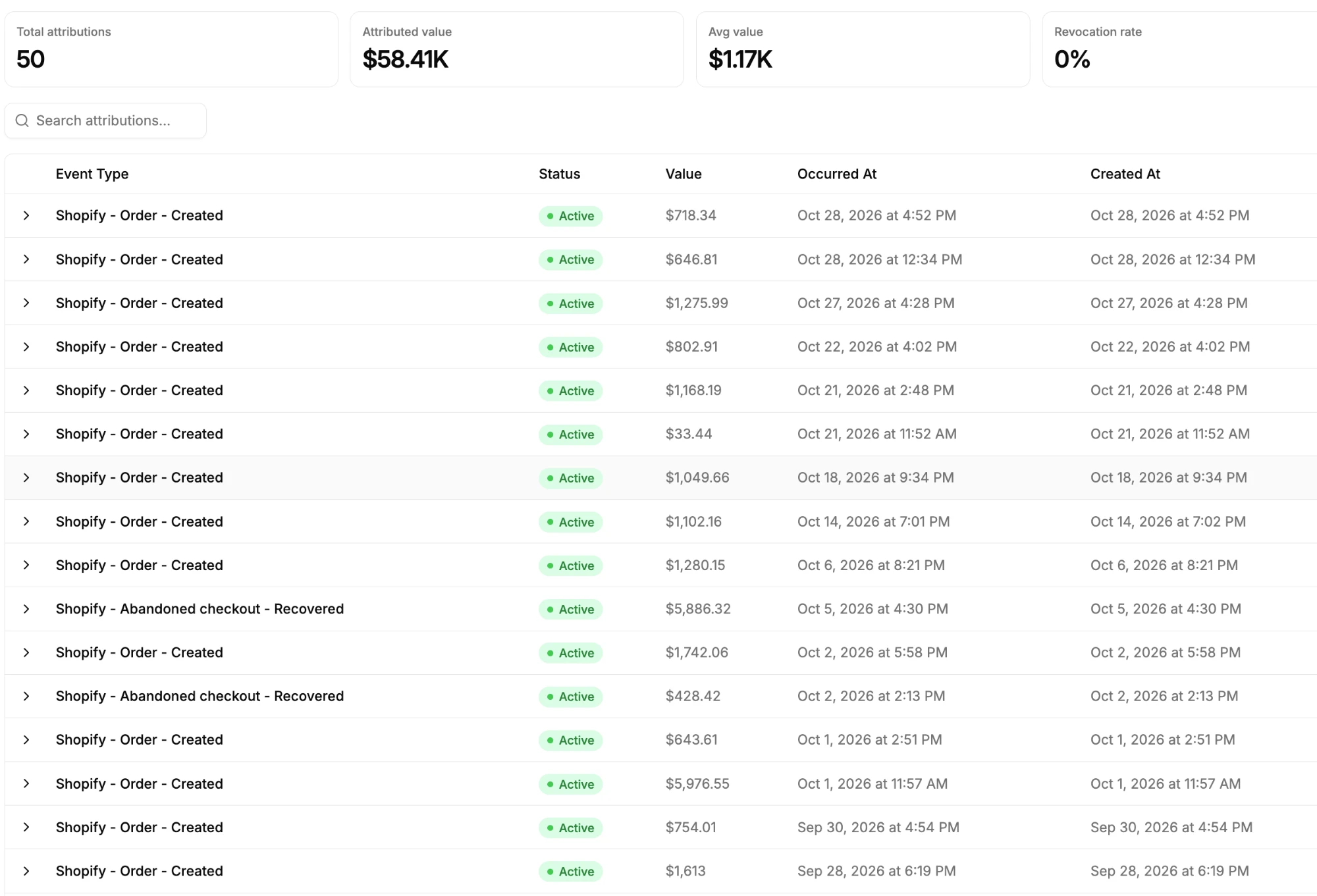
Furniture is one of the last categories where people still pick up the phone. The average attributed order here is $1,168, roughly ten times a typical DTC basket, and nobody commits that much from a product page on their own. They want to hear when it lands, whether the finish is still in stock, and whether the sale price is the real one.
So the phone rang. A team this size cannot put a person on it from nine to nine, and every unanswered call about a £900 cabinet is a customer who dials a competitor that picks up.
La solution
We Interiors split the work across three agents and pointed them in opposite directions. Sophie works outbound. James and Mark answer the phone.
Sophie handles abandoned checkout recovery and order confirmation: 403 completed conversations at 53 seconds each. James and Mark run the answering line and have taken 593 inbound calls, averaging 101 seconds. Nearly twice as long, because somebody who dialled you has an actual question and waits for the actual answer.
What they ask about is not mysterious. Across 594 analysed inbound calls: delivery in 169 of them, stock and availability in 119, the sale terms in 75, order tracking in 32, damage or missing parts in 28, dimensions and assembly in 27, returns in 18.
Six workflows sit behind it, built up over five months rather than switched on at once. Abandoned checkout recovery, order confirmation, delivery and upsell, cancelled order feedback, and two successive generations of missed-call callback that eventually grew into a full answering line.
- 593 inbound calls answered at 101 seconds average, no queue and no voicemail
- Delivery dates and stock, the two questions behind half of every inbound call
- Sale terms explained on the call, on a catalogue discounted up to 80%
- Outbound recovery and order confirmation running alongside, 403 conversations


Les résultats
More than half the attributed revenue, $29,718 of it, came from customers who rang We Interiors themselves. The line most retailers budget as a cost centre brought in more than the outbound campaigns did.
Au-delà des chiffres
Le vrai déclic est venu en comprenant pourquoi les clients abandonnaient au départ. Les transcriptions d'appels de Callsy ont mis en lumière les objections récurrentes :
“When is it actually arriving?”
“Is that still available in the finish I wanted?”
“Is 75% off the real price, or a different table?”
Ces enseignements se sont traduits par des améliorations sur les FAQ, les landing pages et les flux d'e-mails. En traitant les objections plus tôt pour que moins de paniers finissent abandonnés.
La suite
Recovery converts differently at this price point. 21 of the 115 completed recovery conversations ended in a recovered checkout, around 18%, where a lower-ticket store runs in the low single digits. The more a basket is worth, the more a voice is worth.
Voice is carrying almost all of it. Against 1,019 completed conversations there were only 182 delivered SMS, so this is a phone operation with messaging as a footnote, which is unusual and in this category probably correct.
The answering line did not arrive fully formed. It started as a missed-call callback in May, went through a second version in June, and only became a staffed-by-AI front desk in August. The most valuable thing on the account was the thing that got iterated on.
Visite We InteriorsNe lis pas, écoute. Laisse-le t’appeler.
Laisse ton numéro et ton e-mail. Tu confirmes en un clic et l’agent IA de Callsy t’appelle en 30 secondes, parle comme une vraie personne et te montre exactement ce que tes clients entendraient.
- Tu confirmes par e-mail, puis ton téléphone sonne en environ 30 secondes
- Écoute exactement ce que tes clients entendraient
- L’IA dit qu’elle est une IA, à chaque fois
- Juste cet appel. Pas de liste marketing, pas d’inscription

Drop your number. John rings you in 30 seconds, using your business name. Hang up any time.
Tu veux les mêmes résultats pour ta boutique Shopify ?
Opérationnel en 5 minutes. 50 % de réduction promo de lancement. Si ton agent IA ne se rentabilise pas en 30 jours, tu ne nous paies pas.