
Wie häufig sind Warenkorbabbrüche?
Ein Warenkorbabbruch passiert, wenn ein Käufer Artikel in den Warenkorb legt, aber ohne Kauf wieder geht. Es ist das größte Leck im E-Commerce überhaupt. Über Jahre aggregierter Studien hinweg beziffert das Baymard Institute die durchschnittlich dokumentierte Abbruchrate von Online-Warenkörben auf rund 70%. Anders gesagt: Von 10 Käufern, die etwas in den Warenkorb legen, gehen etwa 7 wieder, ohne zu bezahlen.
Auf dem Smartphone ist es schlimmer, wo kleine Bildschirme, fummelige Formulare und Ablenkung die Rate höher treiben als auf dem Desktop. Und es ist kein Randproblem: Branchenschätzungen beziffern den Wert abgebrochener Warenkörbe in den USA und der EU regelmäßig auf Hunderte Milliarden Dollar pro Jahr. Das Meiste davon ist rückgewinnbar, und genau deshalb lohnt es sich, das richtig zu machen.
Die Zahl, die du verinnerlichen solltest: Abbruch ist kein Traffic-Problem, sondern ein Checkout- und Nachfassproblem. Du hast bereits dafür bezahlt, den Käufer bis zum Warenkorb zu bringen. Die Arbeit besteht jetzt darin, die kaufbereiten zu halten und die abgedrifteten zurückzuholen.
Warum Käufer Warenkörbe abbrechen
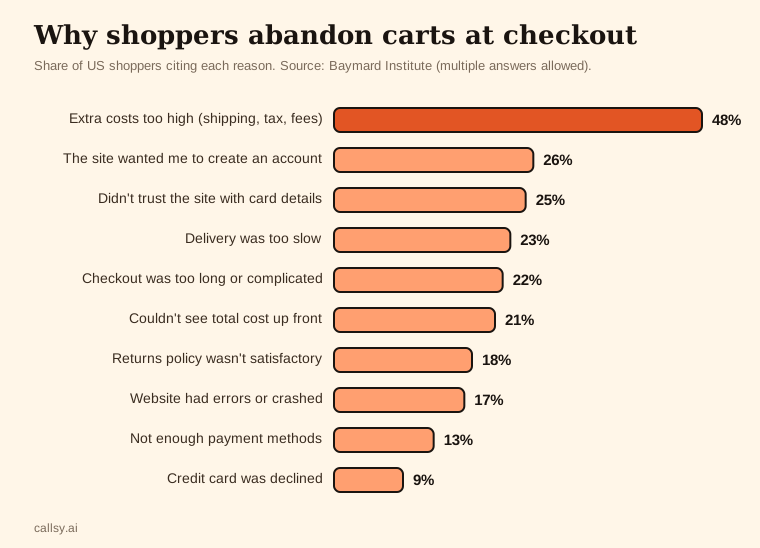
Bevor du irgendetwas reparierst, hilft es zu wissen, warum Leute gehen. Die Forschung von Baymard zu den Gründen (für Käufer, die aus anderen Gründen abbrechen als bloßem Stöbern) landet bei einer konsistenten, kurzen Liste. Behebe diese Punkte und du beseitigst den größten Teil des vermeidbaren Abbruchs:
- Unerwartete Zusatzkosten. Versand, Steuern und Gebühren, die spät im Checkout auftauchen, sind die Ursache Nummer eins. Leute empfinden die Überraschungskosten als Verlust und steigen aus.
- Erzwungene Kontoerstellung. Käufer zur Registrierung zu zwingen, bevor sie zahlen können, ist eine der zuverlässigsten Methoden, sie zu verlieren.
- Ein langer oder komplizierter Checkout. Zu viele Schritte, zu viele Formularfelder, zu viel Reibung.
- Mangelndes Vertrauen in die Seite bei den Kartendaten. Schwache oder fehlende Vertrauenssignale in der Nähe des Zahlen-Buttons.
- Der Gesamtpreis ist nicht im Voraus ersichtlich. Käufer wollen den vollen Preis früh berechnen, nicht erst auf dem letzten Bildschirm.
- Langsame Lieferung, dünne Rückgaberichtlinie oder zu wenige Zahlungsoptionen. Jeder einzelne Punkt ist ein Grund, den Tab zu schließen.
Verhindere es: 8 Checkout-Taktiken
Vermeidung ist die günstigste Rückgewinnung. Der größte Teil des Effekts kommt hier daher, Reibung und Überraschungen im Checkout zu beseitigen. Diese acht sind die wirkungsvollsten, am wenigsten bereuten Änderungen:
- Biete einen Gast-Checkout an. Lass Leute zuerst kaufen und danach ein Konto erstellen. Allein das gewinnt einen spürbaren Teil verlorener Bestellungen zurück.
- Zeige alle Kosten früh. Stelle Versand, Steuern und Gebühren dem Käufer vor dem letzten Schritt vor Augen. Kein Preisschock.
- Setze eine Schwelle für kostenlosen Versand. Kostenloser Versand ab einem festgelegten Bestellwert hebt sowohl die Conversion als auch den durchschnittlichen Bestellwert, ohne die Margen zu ruinieren.
- Verschlanke das Formular. Nutze Autofill, streiche jedes Feld, das du nicht brauchst, und gestalte den mobilen Checkout mit großen Tap-Zielen und einer klaren Fortschrittsanzeige.
- Biete mehrere Zahlungsmethoden an. Gängige Karten, digitale Wallets (Apple Pay, Google Pay, PayPal) und Buy-now-pay-later decken die meisten Präferenzen ab.
- Füge Vertrauenssignale am Zahlen-Button hinzu. Sicherheitssiegel, eine Geld-zurück-Garantie und eine klare Rückgaberichtlinie genau dort, wo der Zweifel entsteht.
- Behalte Produkt-Thumbnails durch den ganzen Checkout. Eine visuelle Erinnerung an das, was sie kaufen, hält die Kaufabsicht wach.
- Entferne Ablenkungen. Nimm Navigation, Popups und Upsells aus dem Checkout-Flow, damit nichts mit dem Kauf-Button konkurriert.
Gewinne es zurück: die Warenkörbe, die du trotzdem verlierst
Selbst ein großartiger Checkout verliert Warenkörbe. Leute werden unterbrochen, vergleichen Preise oder zögern. Die Rückgewinnung ist der zweite Hebel, und hier versteckt sich der größte Teil des Potenzials, weil der Käufer bereits starke Kaufabsicht gezeigt hat.
Das Standard-Playbook ist eine Nachfass-Sequenz. Jeder Kanal hat eine Aufgabe:
- E-Mail-Sequenz (2 bis 3 Nachrichten). Zuerst eine sanfte Erinnerung, dann Social Proof, drittens ein zeitlich begrenzter Anreiz. Zuverlässig, günstig und die Basis, die die meisten Shops fahren. Die Rückgewinnungsraten liegen typischerweise im hohen einstelligen Bereich.
- SMS. Höhere Öffnungsraten als E-Mail und sofort. Eine kurze Nachricht mit einem direkten Link zurück zum Warenkorb funktioniert gut bei Käufern, die zugestimmt haben.
- Retargeting-Anzeigen. Dynamische Anzeigen auf Meta und Google, die genau die zurückgelassenen Produkte zeigen, für Käufer, die du per E-Mail oder SMS nicht erreichst.
- Sprach-Rückruf. Der Kanal, den fast niemand nutzt, und der Grund, warum es diesen Abschnitt gibt. Bei höherwertigen Warenkörben behandelt ein prompter, freundlicher Rückruf (oder ein KI-Sprachagent, der innerhalb von Sekunden zurückruft oder zurückschreibt) Einwände in Echtzeit, wie es keine E-Mail kann.
Rückgewinnungskanäle im Vergleich: E-Mail vs. SMS vs. Sprache
Die meisten Shops hören bei E-Mail auf. Der Grund, warum Sprache zu wenig genutzt wird, ist historisch: Sie brauchte einen Menschen an jedem Anruf, sodass die Rechnung für einen Warenkorb von 120 € nie aufging. Moderne KI-Sprachagenten ändern das, was einen geschichteten Ansatz möglich macht:
- E-Mail: niedrigste Kosten, niedrigste Reibung, niedrigste Conversion. Großartig als Always-on-Basis. Pendelt sich bei rund 6 bis 8% Rückgewinnung ein.
- SMS: höhere Öffnungs- und Klickraten, nahezu sofort, ideal für Käufer mit Opt-in und zeitkritische Anstöße.
- Sprache / KI-Rückruf: höchste Kaufabsicht, weil sie Einwände live behandelt, Details bestätigt und die Bestellung abschließen oder terminieren kann. Am besten höherwertigen Warenkörben vorbehalten, bei denen die Ökonomie klar aufgeht.
- Das siegreiche Setup ist nicht ein Kanal, sondern eine Sequenz: schnelle SMS oder Rückruf für höherwertige Warenkörbe, E-Mail für den Long Tail, Retargeting, um den Rest einzusammeln.
Wie du Warenkorbabbrüche auf Shopify reduzierst
Speziell auf Shopify ist der Checkout teilweise standardisiert, daher liegt der Hebel in den Dingen, die du kontrollierst: Versandkosten und Lieferzeit früh sichtbar machen, Express-Bezahlung aktivieren (Shop Pay, Apple Pay, Google Pay) und den mobilen Flow sauber halten.
Dann lege die Rückgewinnung obendrauf. Shopify kann E-Mails zu abgebrochenen Checkouts nativ auslösen, aber die höchstwertigen Warenkörbe verdienen mehr als eine E-Mail am nächsten Tag. Eine angebundene KI-Sprach- und SMS-Schicht lässt dich diese Käufer innerhalb von Sekunden zurückrufen oder anschreiben, in deiner Markenstimme, solange die Kaufabsicht noch warm ist.
Kenne zuerst deine Zahl
Bevor du Taktiken auswählst, setze einen Euro-Betrag an das Problem. Ein Shop mit 50.000 monatlichen Besuchern bei einer Abbruchrate von 70% und einem durchschnittlichen Bestellwert von 120 € lässt jeden Monat einen großen, sehr konkreten Geldbetrag liegen. Diese Zahl zu sehen ist es, was die Warenkorb-Rückgewinnung von einem Nice-to-have zu einer Priorität macht.
Nutze den kostenlosen Callsy-Rechner für den Umsatzverlust durch abgebrochene Warenkörbe, gib deinen Traffic, deine Abbruchrate und deinen Bestellwert ein und sieh deinen monatlichen und jährlichen Verlust, plus den Anteil, der realistisch rückgewinnbar ist. Es dauert etwa eine Minute und schärft jede folgende Entscheidung.
Häufig gestellte Fragen
Wie häufig sind Warenkorbabbrüche? Im Durchschnitt werden rund 70% der Online-Warenkörbe abgebrochen (Baymard Institute), auf dem Smartphone höher. Es ist die größte einzelne Quelle entgangenen E-Commerce-Umsatzes.
Was verursacht Warenkorbabbrüche? Die häufigsten Ursachen sind unerwartete Zusatzkosten (Versand, Steuern, Gebühren), die spät auftauchen, erzwungene Kontoerstellung, ein langer oder komplizierter Checkout, schwache Vertrauenssignale und zu wenige Zahlungsoptionen.
Wie reduziert man Warenkorbabbrüche? Zwei Hebel. Verhindere sie, indem du Checkout-Reibung beseitigst (Gast-Checkout, transparente Preise, weniger Formularfelder, mehr Zahlungsmethoden, Vertrauenssignale). Gewinne sie zurück mit einer Nachfass-Sequenz über E-Mail, SMS und einen Sprach-Rückruf in Echtzeit für höherwertige Warenkörbe.
Wie gewinnt man einen abgebrochenen Warenkorb zurück? Erreiche den Käufer, solange die Kaufabsicht warm ist. E-Mail ist die Basis (rund 6 bis 8% Rückgewinnung); SMS und ein KI-Sprach-Rückruf konvertieren bei wertvollen Warenkörben besser, weil sie sofort sind und Einwände in Echtzeit behandeln.