Free templates

Abandoned cart email examples. Three that work, and why.

Copy these. Full sequence below with the timing, the subject lines, and the reasoning behind every line, so you can adapt them to your store instead of pasting someone else’s voice into your inbox.

The three below are the whole sequence. The pack adds the subject-line bank, plain-text versions, and the win-back sequence.

Three clay envelope characters in ascending size beside a small shopping cart, representing a three-email abandoned cart sequence
Three emails, not one. Most of the recovery sits in the second and third.

The sequence, and why the gaps matter

Purchase intent decays fastest in the first hours, which is why the first email is a nudge and the discount waits until the end.

Purchase intent1 hourthe nudge24 hoursthe objection72 hoursthe offerNo discount yetDiscount only once, hereSend at 1 hour, 24 hours, 72 hours
Curve is illustrative of how quickly intent falls away, not measured data.
011 hour after abandonmentRemove the friction, not the price
Subject
You left the oat linen set behind
Preview text
Your cart is saved. One tap to finish.

Hi Maria,

You were looking at the Natural Linen Bedding Set in oat, queen size. It is still in your cart and we have held it for you.

If something was unclear, sizing, delivery, or returns, just reply to this email. A real person reads these.

Finish your order →

Free returns within 60 days. Delivery in 2 to 4 working days.

Why it is written this way
  • No discount. Most people who abandon at one hour are distracted, not price-sensitive, and discounting here trains customers to abandon on purpose.
  • Names the exact product and variant. Generic "you left something behind" emails read as automated and convert worse.
  • Puts the two most common objections, returns and delivery, directly under the button so nobody has to go looking.

0224 hours after abandonmentAnswer the objection that actually stopped them
Subject
Not sure about the size?
Preview text
The queen set fits a standard US and EU queen.

Hi Maria,

Most people who pause on this set are working out the sizing, so here it is plainly.

The queen set is 220 × 240 cm. It fits a standard US or EU queen with roughly 20 cm of overhang each side.

Still not sure? Reply with your mattress size and we will tell you which one to order.

Your cart is still saved →

Why it is written this way
  • Picks one objection and answers it properly, rather than listing five benefits. You should know your top objection from support tickets; if you do not, that is the first thing to go find out.
  • The specific measurement does the work. "Generously sized" persuades nobody who is actually worried about fit.
  • Invites a reply. Replies improve deliverability and occasionally start a real conversation that closes the sale.
0372 hours after abandonmentMake the offer, once, with a real reason
Subject
Last call on your cart (and 10% off)
Preview text
We are releasing held stock tomorrow.

Hi Maria,

We hold abandoned carts for three days, and yours is up tomorrow.

If it was the price, here is 10% off: LINEN10

Claim it and check out →

If it was not the price, ignore the code and just tell us what stopped you. That feedback is genuinely useful to us.

Why it is written this way
  • The discount comes last, and only after two attempts without one. Leading with a code costs you margin on people who would have paid full price.
  • The deadline is real. Manufactured urgency is transparent and it damages trust with the customers most likely to buy again.
  • Gives a way out that is not a purchase. Some of the most useful product feedback you will get comes from this line.

Ten subject lines to start from

Specific beats clever. Every one of these names a thing or asks a real question, which is why they open better than wordplay.

You left the oat linen set behindStill thinking it over?Not sure about the size?Your cart expires tomorrowDid something go wrong at checkout?We saved your cartQuick question about your orderLast call on your cart (and 10% off)That thing you wanted is nearly goneFree returns, in case that was the worry

Five mistakes that cost the most

Discounting in the first email

You pay margin on customers who were going to buy anyway, and you teach the rest to abandon deliberately. Hold the code back to email three.

Sending one email and stopping

A single reminder captures a fraction of what a three-email sequence does. Most of the recovery sits in emails two and three.

Generic "you left something in your cart"

If the email does not name the product, it reads as a system notification. Naming the item and variant is the single easiest improvement to make.

Waiting a full day for the first send

Intent decays fast. One hour is the standard first touch, and pushing it to 24 leaves the easiest recoveries on the table.

No plain-text version

Heavily designed emails are more likely to land in Promotions. A plain-text-looking email from a real person often outperforms the branded template.

Where email stops working, and what to do about it

A good sequence gets you a long way, and if you are currently sending one email, writing the other two is the highest-return hour you will spend this month.

But email has a ceiling that copy cannot lift. It only works on people who open it, and on a cart list most people do not. Once your sequence is properly built and tested, further gains stop coming from better subject lines and start coming from a second channel: an SMS, or on higher-value carts, an actual phone call.

That is what we build, so treat that as a disclosed bias rather than neutral advice. Fix the emails first. They are free, they work, and you should exhaust them before paying anyone, including us, for another channel. The honest comparison is here.

Free, no catch

Want the whole pack?

All three sequences written out, the subject-line bank, plain-text versions, and the win-back emails for customers who never came back. Yours in exchange for an email address.

Send me the templates

Frequently asked

How many abandoned cart emails should I send?

Three is the usual answer, at roughly one hour, 24 hours and 72 hours. The first is a friction-removing nudge, the second answers your most common objection, the third makes an offer with a real deadline. Most stores send one and leave the majority of the recoverable revenue behind.

When should the first abandoned cart email go out?

About an hour after abandonment. Purchase intent decays quickly, so a same-day sequence recovers more than a next-day one. Some stores go as short as 20 minutes, which is fine if your checkout is not prone to people legitimately stepping away mid-purchase.

Should abandoned cart emails include a discount?

Not in the first one, and ideally not in the second. A discount in email one costs margin on every customer who would have completed anyway, and repeat shoppers quickly learn that abandoning a cart produces a code. Keep it for the final email, where it is a genuine tiebreaker.

What is a good abandoned cart email open rate?

Cart recovery emails typically open far better than a marketing broadcast, because the recipient was on your site minutes ago. That said, open rate is not the number to optimise. Revenue per recipient is, and a sequence with a modest open rate that answers the real objection will beat a clever subject line that opens well and converts nothing.

Why do most abandoned carts stay unrecovered even with email?

Because email only reaches the people who open it. Even a well-run sequence leaves the majority of a cart list untouched, and that gap is not a copywriting problem, it is a channel problem. Stores that recover more usually add a second channel, SMS or a phone call, rather than writing a fourth email.

Can I just copy these examples?

Yes, that is what they are for. Swap the product names, the measurements and the returns policy for yours, and check that the objection in email two is genuinely your most common one, because that is the part that does not transfer between stores.

Try it · no booking, no signup

Don’t read about it. Let it call you.

Drop your number and email. Confirm with one tap and Callsy’s AI agent rings your phone in about 30 seconds, talks like a real person, and shows you exactly what your customers would hear.

What happens next
  • You confirm by email, then your phone rings in about 30 seconds
  • Hear exactly what your customers would hear
  • The AI says it’s AI, every time
  • Just this one call. No marketing list, no signup
TCPA-compliantGDPR-readyEU-hosted
9:41
John, Callsy AI
Hear it now · no booking
Hear John ring you back.

Drop your number. John rings you in 30 seconds, using your business name. Hang up any time.

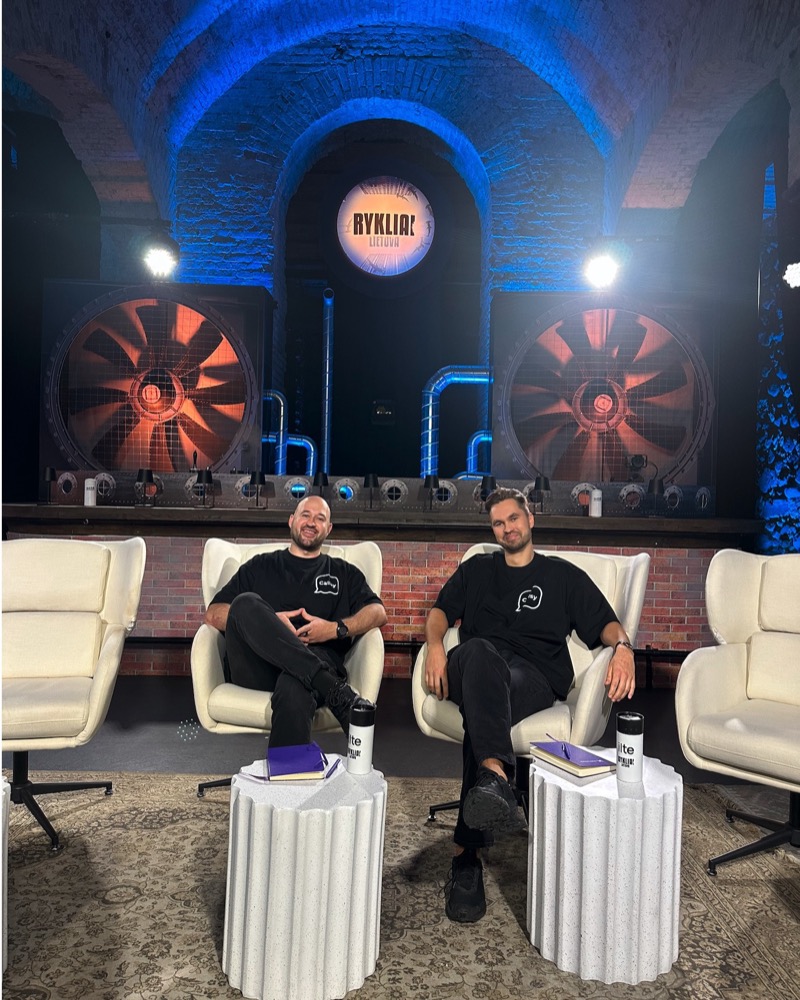
Arunas Vismantas (CEO) and Laimonas Sutkus (CTO), founders of Callsy
Meet the founders

Built by founders, not a committee.

We're Arunas and Laimonas. We started Callsy because every D2C founder we talked to was losing revenue at checkout, and email recovery had plateaued. Voice was the obvious answer. AI finally made the unit economics work. If you're in the same spot, let's talk.

Shark Tank LithuaniaLatitude59 finalist500 GlobalFirstpick VC

No pitch deck. Just a live walkthrough of your setup.